
The Kids Are All Right
Teaching high school English is renewing my sense of hope.


My alarm goes off now at 6:45 each morning. This, to me, is an anomaly. Me, of skipped 8 am classes in college. Me, of the truly 9-5 remote work world. Me, of a lifetime of midnight bedtimes. Night owl is what they call me; I left all the worms for the early birds.
The night owl in me respectively prepares the forced early bird for her days. The coffee machine is set up, requiring only the press of a button. I set my truck keys next to my daily wash of vitamins, and I hit the remote start button to ensure warmth upon forthcoming entry. My outfit for the day is picked out. I wear my watch to time things out as best as my certified ADHD time blindness allows me, too. I begin to play music on my phone as the morning glaze ensures that I will set it down and forget about it, lest it sing songs from its unlikely perch. I curse my died-in-the-wool permanent circadian rhythm. It never truly catches up with this schedule, but over the past few weeks, it’s gotten a little more normal. I try to stay within its bounds on weekends. I’m working to make it work.
If there’s a gift in any of this, it’s that I am partial to sunrises. Becoming a hunter gave me something to woo over in the pursuit’s prescribed early mornings. The dull eyes grow a little shine when trained on the stretch of sun over a horizon, warm colors seeping into inky blues slowly blotting out the stars. My morning drive is magnificent. The Anaconda-Pintler range takes up most of the scene, with gripping pinks, golds, silvery-blues, the reflection of snowfields, and the majesty of purple mountains. This commute is not a city one, drenched in towers and concrete, but one dripping with mountains and the sizable elk herd that I now know like the palm of my hand. Here is where they cross over, there they are as tiny dots on the ARCO fields, grazing upon the buried Superfund waste of Anaconda’s once active smelter, now to my left. It looms over this little town, and its effects are long from forgotten.
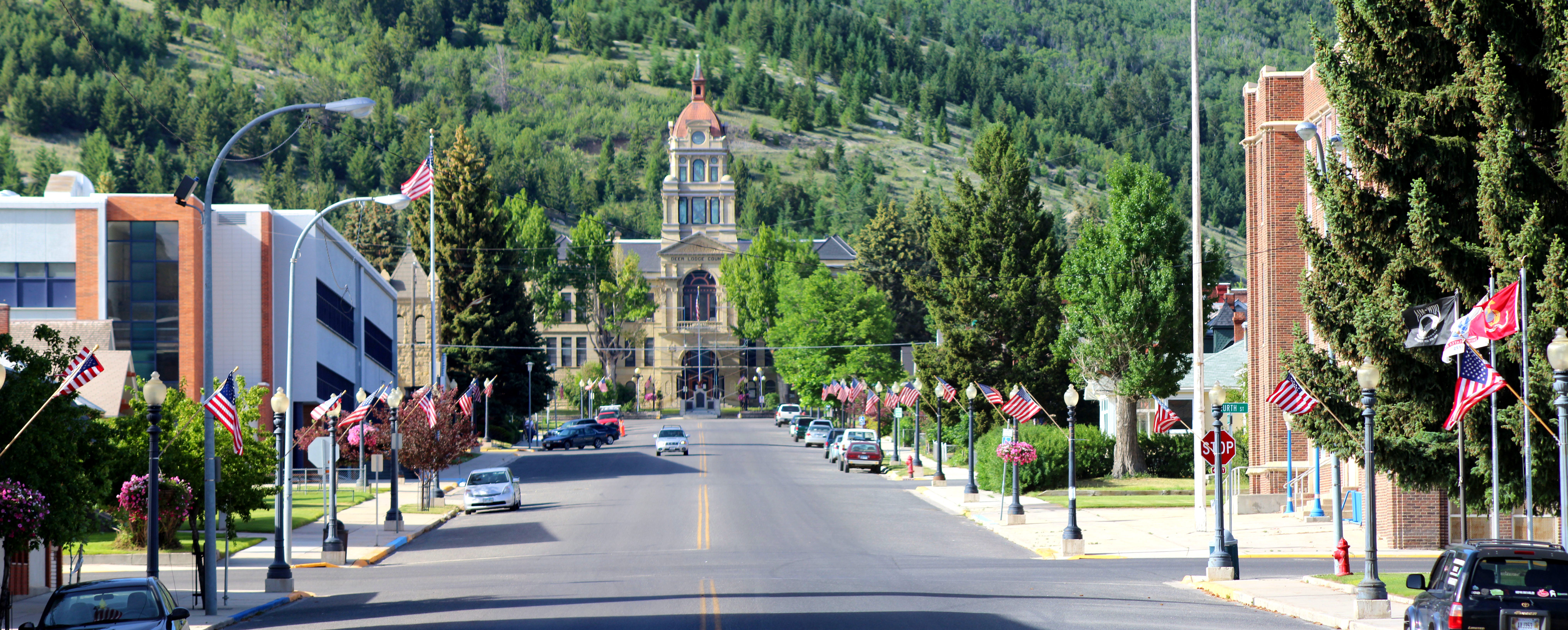
My drive takes me directly to the combined junior/senior high school, situated on one of the prettiest streets in Montana. Upon parking, I slip my badge on, grab my packed bag, and head inside.
Each day begins at 8:11, but the school’s clock is 3-4 minutes fast. I have to remind myself of this against all that time blindness of my morning. I get there by 8 am. Set up my computer, slides crisp in the front of the room. I teach two classes of juniors first, then a creative writing class, then an eighth-grade class, another junior class, and I finish with a tidy and small class of eighth graders. In the span of a few weeks, I’ve stepped incompletely out of the role of writer and into the role of long-term substitute English teacher. They call me Miss Q, not to be confused with “miscue,” though it’s likely something I’m doing way too often at the moment.
Most of my juniors come in weary-eyed to that dreaded first period. I see them as kindreds; we’ll get through this together. Each class that switches in and out of the room takes on its own personality. There are a few that are rowdy brigades of jovial mischief. Others are quiet and studious, and there are always one or two a day that seem to stretch into the world of an energetic tug of war. If I view these 50-minute periods as a game, it is far less treacherous, and so that I do. Framing and reframing are constant when working with kids, as is Oscar-worthy acting necessary through the hardest moments, or the moments in which my opinion is on their side; however, from a teaching perspective, my job is to hide that opinion so thoroughly that they choose to do the thing that none of us want to be doing in the first place. I am not without a well-developed skillset in this eternal tradition of adult-pupil performance. Though I am starkly new to the educational side, crowd management with children is baked into my blood from many years of working in after-school programs, reading programs, youth sports, day camps, and sleepaway camps. I can, at the very least, quiet a room of rowdy 13-year-olds with a single clap of the hand. Or two. Or three. (They respond to each of my claps with two claps. It does, occasionally, take a while.)
This interesting switch of employment, thankfully, isn’t without mentorship. A highly experienced English teacher scaffolds my days with slides, projects, and support. I mostly get through them, though lenience might be a weak point. The editor in me offers revisions, comments upon comments, and multiple chances to get assignments just a little more correct. Sure, I’ll extend this deadline. Give a little more padding. This got to the point where the kids told me enough is enough, just give us the due date, and I realized the folly of my error.
'“You’ve been super fair and given us more than enough time,” one junior told me, the class adding a muttered and nodding collective agreement as she spoke. “If we haven’t gotten it done at this point, it’s not because of your timeline.” I recognized in that very moment that I could be a little more black-and-white with them, and that they could even help me set that standard. Being overly fair could also be interpreted as coddling, and I needed to quickly cross that verb off my list of duties.
Coming into the classroom in late January, I was far removed from the years I spent working with children. The last kid-centric job I held was in 2008-09, when I served a year as an AmeriCorps VISTA at a therapeutic recreational center for kids with disabilities just south of Boston, MA.
Is it an American pastime to speak ill of children, and how whatever modern technology of the time is ruining their lives? It must be. I didn’t know what to expect from this group — the closing runners of Gen Z’s generational relay, with Gen Alpha close behind and six-sevening on their heels.
I remember that cable television and the rise of the chat room were the black stains on my Millennial childhood, and how the long sign-on sound indicating the hijacking of the family telephone line signaled that I was about to jump into the depths of a perverse internet, willing and ready to murder me at every moment. I have borne witness to the rise of fabulous kids, smart kids, empathetic kids who, under Millennial parents, seemed to have a therapied and parentally-informed adjusted sense of the world that was never offered to me, simply because it’s a newer development. I figured this experience would sit somewhere in the middle, and I was not wrong.
The reality is, I walked into the school with curiosity stuck to the bottom of my Adidas Sambas, trailing me like toilet paper a few squares behind, leaving me vulnerable to the reality of the kids in my classroom. All 112 of them.
Anaconda is not, as one might guess from our rising house costs, a town of historic means. Many of my students are living through childhoods with truly adult problems at the center of their young lives. In my first few weeks, they’ve trusted me with secret stories that have inspired the mama grizzly in me to rise on her hind legs, claws sharp, to tell them to get behind me, that I would take on the front line of their life — if only I could.
But, I can’t do that. They are, if nothing else, on the front lines of their own lives, as I was when I lost my dad to cancer my sophomore year of high school, then moved from Ohio to Colorado in my junior year, so my mom could take on a bigger job to support two teenage girls.
I got through it, I tell them. So can you. And I believe it when I tell them that they can, even if my grizzled hackles are standing up through the wool knit of my teacher-appropriate sweater.
They all have phones. Phones full of games, Snap, TikTok, the ‘gram, ChatGPTizzle. They are phone geniuses. They are phone acolytes. I was worried about phones coming into the classroom, and rarely are phones an issue at all.
Let me repeat that: phones really aren’t the issue they’re made to be. The kids are well-behaved with them, and routines are established that have prevented them from being an issue in my classroom.
Every Friday morning, the school reserves a half hour for what is called Social and Emotional Learning (SEL). Personally, I love it. And because I love it, the kids get into it. This past week, we played a game of “Would You Rather” to talk about attitudes. Would you rather have unlimited sushi or tacos for the rest of your life? Would you rather always hit a green light or never stand in line again? Would you rather give up all forms of social media or Google search & AI?
The last one astounded me. Only one kid joined me in giving up social media.
Really? I said. Doesn’t social media bum you out? (I say this after deactivating my Facebook for the first time in 2005, and feeling only a sense of ‘good riddance’ in the aftermath.)
It’s how we stay in touch, they told me. Plus, they still have AI and search capabilities within social media, ‘experts’ who can tell them what’s what, and the ability to learn from each other’s opinions, rather than the garbage internet. Point taken. But also, really? I stand by my reaction. I’m still flummoxed by theirs.
After this exchange, I thought back to my time in high school, the elaborate efforts my friends and I made to stay in touch between periods. We’d write decorative letters in gel pens, fold them into neat origami patterns, and slip them into hands as we passed each other in the hallway. In the notes lay secret codes that couldn’t be deciphered, drawings, dreams, drama, crushes, rivalries. Shakespearean worlds we made, and we made them together. Social media seems to fill this gap, I think to myself. And in that, I rectify the situation.
On my first day of teaching, I made a fill-in-the-blank profile for each student to fill out, to get to know them, and to get a sense of who they were. It had basics like name, birthday, what period I had them, and then a bit about futures and dreams. If you could be an expert in anything, what would it be? What is your dream job? Is there something that I should know about you? I made the last question optional.
Dreams of expertise made me laugh. Most kids just wanted to be good at the school subject that was most difficult for them. Math! So many of them said math. Science. The STEMs. They are firmly planted in their present. They would like that part of life to be easier. I love that for them.
If I were to listen to the powers that be, the ones that inspire anxiety on the half of this iPhone generation, they’d probably tell me that kids just want to be influencers, content creators, famous on the TikTok algo. Only one kid out of 100 said they’d like to create content, and I’ll tell you it’s a kid that might be good at that game of numbers.
Surprisingly, or unsurprisingly, I read through a cadre of dream jobs that seem to remain unchanged since my own version of time immemorial. Marine biologists. Dolphin trainer. Criminal psychologists. Veterinarians.
Veterinarians!
Others wrote that they wanted to be welders, linemen, and diesel mechanics. A few standouts said they’d like to be a neonatal nurse, a quantum physicist, or a rodeo athlete at the NFR.
I almost wept as I read of these dreams. They are so tangible and childlike, so close to my own childhood dreams. These are jobs that make us feel like we’re helping, we’re having adventures, we have the answers to the problems of the innocent. These are the comfort food the pile of cloud-like mashed potatoes of dream jobs. The kids are all right, I said to myself. Amidst everything, they are still just kids. And they’re all right.
In spite of everything. In the optional question, I saw answers that ran the gamut. Some kids were brave enough to tell me that they’re dyslexic, that they might need extra help in my class. One girl told me to try not to get too close to her, she didn’t like when strangers wanted to be her friend. Another told me she that she too loved horses. Others talked about their hobbies, and still others told me things far more serious to note here. Most simply answered no or left it blank. Some of them have since opened up to me, told me secrets that I carry like a gift in my heart for them, secrets that the whole town knows, but I am able to see them without those secrets until they, in their own quiet moment, decide to impart them with faith to me.
There is such a great uncertainty wrapping around many things we assumed were solid as cement, were agreed upon solidities. Substack is thick with people who have opinions, light-shedding abilities, crackin’ headlines that will pull you in and make you hit subscribe only because you so vehemently agree with those opinions. The body politic seems to be shedding parts and rearranging into a monstrosity of odd proportions.
What hope? We say to ourselves, what is there to hold onto?
I’m here to ask you to shed the skin that once told you that iPhones are ruining the brains of the next generation. They are, as this MTV brat will tell you, not a monolith. They are filled with rainbows and big dreams, reaching toward the future with bright eyes, trying to figure out the basics of sentence structure like we all once did, and reminding me that I can hold them accountable to deadlines, even when they’re struggling.
And then, a few days ago, I saw an exchange that tugged the strings of my heart, which then fell to pieces on the floor. Two girls, in the hallway, exchanging a perfectly folded origami note, with colorful writing on the outer shell of the paper, with a nod and a knowing smile, with no words exchanged. I nearly gasped with delight. I nearly fell over in a spell of nostalgia. If I had a chair, I might have fallen out of it.
The kids are all right. By God, they are.
Nicole Qualtieri (@nkqualtieri) is the Editor-in-Chief and co-founder of The Westrn. She’s worked in outdoor media for a decade, with brands ranging from MeatEater to Backcountry Hunters & Anglers to acting as the long-time Hunt & Fish Editor at GearJunkie. Her writing has appeared in USA Today, Modern Huntsman, the Backcountry Journal, and more.
❤️
One of my favorite things about working with young people is when they teach me something! It happens so often, even more so when we do our part by listening to them.