

The City Folks' Guide to Thriving Outside
A project eight years in the making is now coming to my Substack <3

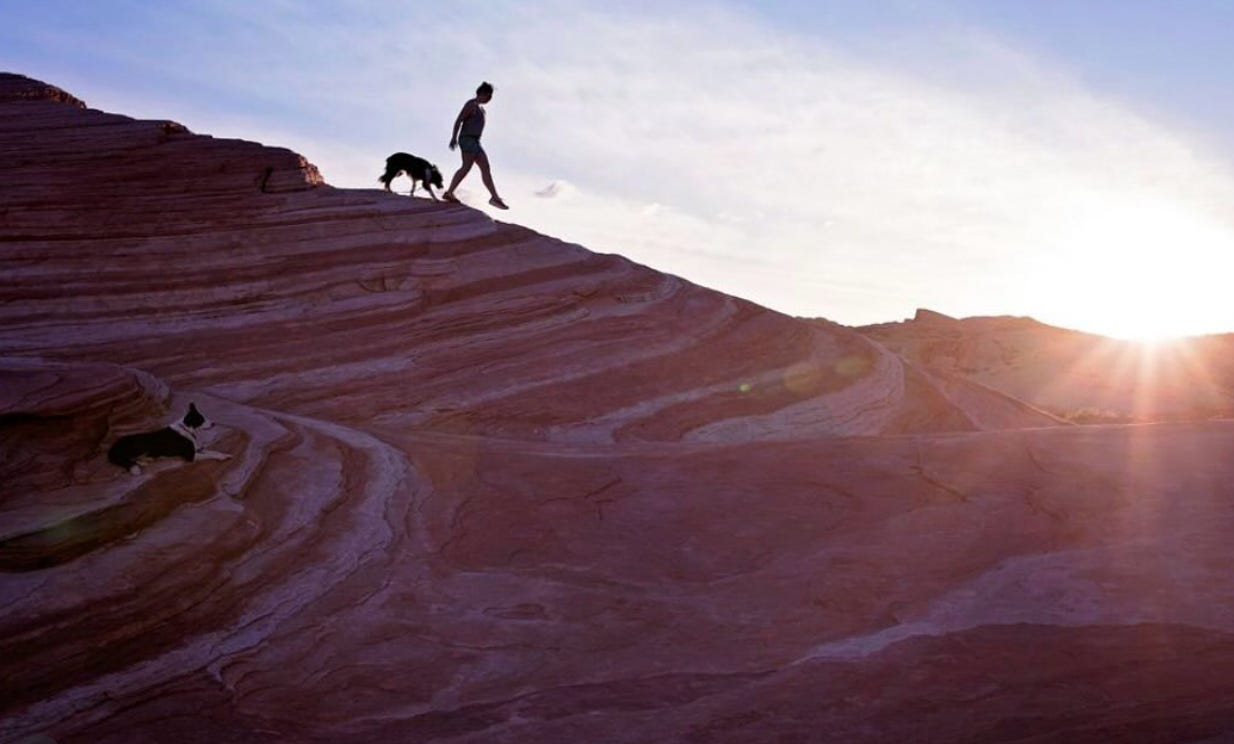
In 2017, I sat down and wrote 30,000 words in a week. I was on Christmas break from my gig at Backcountry Hunters & Anglers, and I was pressing towards a dream I had of becoming a published author.
My goal was to write a short book designed for urbanites to feel more at peace with heading into the woods. After all, I had been a corporate gal living and working in downtown Denver for five years prior to moving to Montana, where my world suddenly shifted from city life, to small town life, to my first forays into Montana’s great wild places. For me, the transformation demolished the concrete under my feet to the point that it all but disappeared.
I worked hard to try and find an agent for that book, and it gathered dust for awhile. Then, last year, I picked it up again with seven more years of experience, professional outdoor writing, gear testing, and adventures under my belt. Again, finding an agent proved to be difficult. When one agent did show interest, she told me she hated hunting and didn’t know how she could support the book with that side of natural participation attached to it. That, for me, became a dream deferred. I couldn’t work with someone who felt that way.
So, I’ve decided to pivot. I’m adapting once more, and I’m going to share much of what I’ve written here, in the hopes that maybe some folks do read it and begin feeling a bit more confident about their ability to connect with nature. This is not the 2017 iteration, nor is it the 2025 iteration in its original format, but one that I’m still building, adapting, and hoping to change a few lives with.
I’ll follow up with the next installation in just a few days.
The Black Bear
I sat high on the rocks below the waterfall, surrounded in all directions by glacial mountains with pale turquoise waters at their planted feet. But I wasn’t looking at the majestic vista. Instead, I focused on a single patch of wildflowers, lined by tall pines on one side and dipping down into the curve of the valley on the other.
In the wildflowers, a young black bear rolled onto her back, grabbing her toes like an infant. I’d terrified myself a few minutes earlier when we came nearly face to face in a thick bramble of berries. At first, I wondered what an off-leash dog was doing in the woods alone, but then her shape shifted into a frank reality. She turned, sat, perked her ears, and woofed at me softly. My phone was already out. I’d been taking pics of wildflowers up the trail as I popped sun-warm berries into my mouth. I snapped a pic of her as I backed up. Once out of sight, I quickly hiked up the trail above THE BEAR. My first bear! In real life! This — the most terrifying animal I could possibly run into! How would I get back down past her? Fear and uncertainty flooded the moment.
But, I took a deep breath and climbed to a red rock vantage point to see if I could spot her again. And yes, there she was. She emerged — yawning and waddling — from the line of pine trees where we’d met. Stuffed with an abundance of sweet huckleberries, she rolled around in crimson sticky paintbrush, lavender lupines, and glacier lilies in a state of pure bliss. She reached for her toes and began somersaulting down the low grade of hill, gaining speed as she went. I stifled my laughter against my adrenal surge of awe.
At the bottom of the hill ran a creek I could cross in two steps down. The heat of the summer day hung heavy. Dressed in a glossy coal black coat; she splashed and played in the small water, causing a big scene for me and only me. She stomped and jumped and leapt to her heart content. She made a big cannonball move in a creek eddy, then fell hard into soft grasses with absolute ecstasy, then leapt back into the water.
Once cooled off, she curled into a thicket of grasses so thick you could only see a small glimpse of her hide and fell asleep. I watched the thin strip of hide rise and fall in big breaths. She went from joy full steam to rest full stop in an instant. You could walk by her and barely see her. You likely wouldn’t even rouse her, so deep in her afternoon nap. And there she was, safe in cover, fat and sassy and — very clearly — happy.
This — my greatest fear, my primary perceived predator of the woods! This! This joyful, blissful, glorious little being! She gave me the greatest gift that day, and perhaps she knew it. Her soft woof was a small worry against my gargantuan one. And yet, she turned away from me not out of fear, but with the determination to play, to not let a two-legged being riddled with anxiety ruin her perfect summer day.
And in her easy way of going, she changed me. The mountain soil shifted under my feet. I knew I’d found a place in the world, where I could grow, play, change, and be — like her — wholly myself.
That was the day I decided that, yes, perhaps I was more outdoorsy than I thought.
Becoming an Outdoorswoman
I met the bear in the summer of 2013, on the outskirts of Glacier National Park, on my very first solo car camping trip. I’d taken four days off from my job bartending in town to explore what it might mean to camp alone, to hike in big mountains during the day, and then come back to the walls of a tent rather than the walls of my in-town apartment.
Of course, I’d camped before. My family wasn’t so outdoorsy, but my friends’ parents often toted me along on family adventures, and I was exposed to all sorts of outdoor activities that way. In high school, our parents allowed four teenage girls to head out sans adults into the backcountry of Rocky Mountain National Park for three days. We camped high in the alpine, giggling and eating trail mix in our tents during a storm, then frightening ourselves with ghost stories.
In college, my clan of rowdy friends camped to escape the ‘Minor in Possession’ tickets handed out by local cops. Up the Cache le Poudre canyon, we’d drink crappy beer then sleep without pads on cold ground like the noobs we were. I thought camping was uncomfortable. And, in the way that we did it, it was. (A decent sleeping pad, my friends, is an absolute must.) I also worked at east coast sleepaway camps as a counselor all through college, where we played sports, swam, and lived a dreamy sort of bubble life for eight weeks. Camp life was outdoorsy in that it was outdoors, but I wouldn’t describe it as rugged.
As my twenties stretched on, I headed towards cities, leaving Colorado State University and a rural-adjacent life behind. I served a year as an AmeriCorps VISTA at a therapeutic horseback riding center outside of Boston, living in Allston-Brighton. Then, I went back to Colorado and tucked myself into downtown Denver, where my hobbies were corporate life, stand-up comedy, and riding horses.
If you would have told me that in the next decade I’d become an outdoor writer with a bent towards hunting, fishing, and backpacking, I’d have laughed you out of the room. But, that’s how the Clif bar crumbled, and the solo adventure to Glacier opened Pandora’s box.
I climbed to the top of that red rock waterfall, tucked into the cliffs of a glacial valley, and walked toward a new life on the hike down.
Getting Prepared, From the Inside Out
There are so many incredible tomes of experiential knowledge, and yet, I find that the biggest barrier to getting out into wild places actually starts with navigating our worries, the amount of confidence we bring to the adventure, and — most importantly — our fear.
So, I’m dedicating the first part of this series not to the actual bear on the mountain, but to the imaginary one we carry in the pit of our stomach. That, in my experience, is the scariest bear of all.
Let’s get after it.
Part I: The Somatics of Being Outdoors
“We don’t rise to the level of our expectations; we fall to the level of our training” - Archilochus, Greek Philosopher
The biggest obstacles I faced as a new outdoorswoman had little to do with gear, skill acquisition, or even basic knowledge. They were — drumroll, please — internal.
Montana offers up a lot of things to think about, and I thought about all of them. I was wildly, hilariously, dramatically worried about bears, and yet I was equally curious about them. I worried about not knowing what I knew I didn’t know and how that lack of knowledge might get me into preventable trouble. I thought about mountain lions, creepy people, and what I’d do if I got lost. I worried about crazy weather, lightning, and flash floods. Trees could fall! What if I upset a moose? I am occasionally clumsy and inelegant! I could fall!
If you can think of it, I thought of it first, I promise you.
There are both safety measures you can take and gear that you can carry that will inevitably quiet some of your fears. That comes later.
For now, I want us to take a deep breath, consider what might go wrong, and understand that it would be a hell of a lot weirder if you went into the woods with zero trepidation at all. I’d consider it a red flag if you weren’t worried. There are absolutely things to worry about outside, but miles + time normalizes life in the woods. Another way forward simply doesn’t exist. You must go, and you must experience, and those two things put together will slowly build out your ever- evolving level of comfort.
Discomfort is the precursor to growth. We can minimize our discomfort and maximize fun by changing and increasing our level of exposure. I’ve designed the series in this way, so that you can move through it, part by part, and see how we can increase the capacity for emotional load outside, while also developing multiple levels of competencies.
This is the easy way. If you’re like me, you’ll read this and jump off the deep end into something much harder than you’re prepared for. That’s my kind of fun. If you do that, things might feel and/or get pretty intense. Don’t say I didn’t warn you. I’ll do my best to help out.
I want to address the normalcy of fear, including our base instincts as well as our intuition. I talk about how we manage these feelings to get to a state of attunement with our surroundings, the science that backs up our connection to natural landscapes, the three types of fun and why they’re important, the art of mental preparation, and the paths we might choose to better connect to the land.
These are all basic entry points to preparing our brain to have a holistic understanding of what you might face in your mind, body, and spirit as you choose to engage with wild places. Whole books could be written on any of these topics, but here, we are simply adding mental bullet points to prepare ourselves when difficult feelings arise. They will. That’s okay. That opens the door to an honest and fulfilling experience. That also opens the door to building a deep sense of resilience, both inside and out.
Fear is Normal
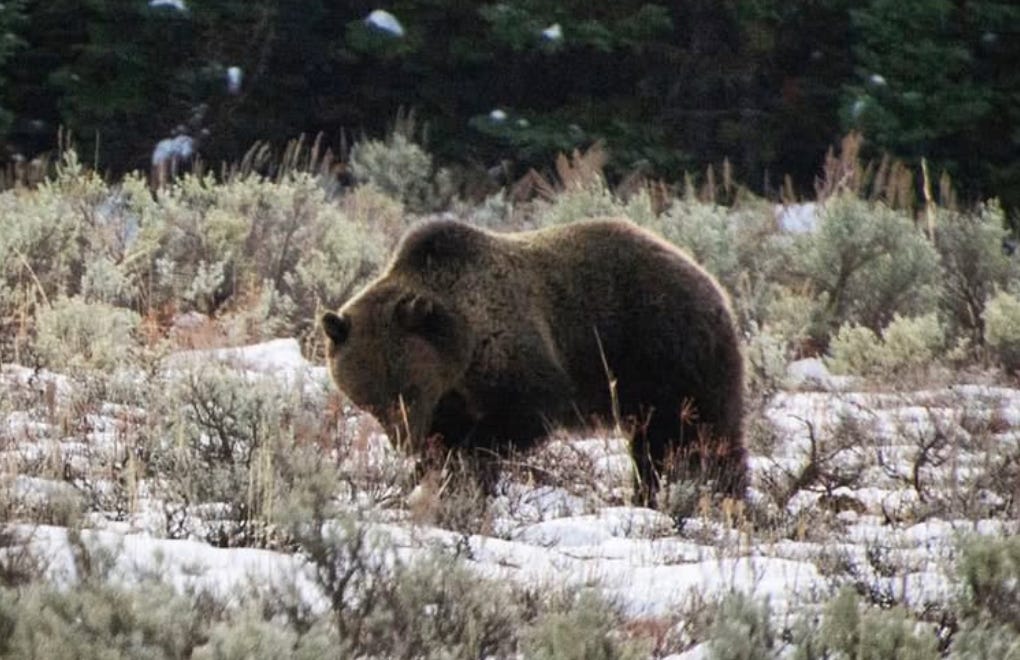
I camped alone for the first time this year a few days ago. With all you now know about me, you might be surprised that I prepared myself to feel afraid.
I was, by all accounts, absolutely safe. I slept in my truck camper, which sits about nine feet above ground. Tucked into the pop-up tent with the window open to the stars, I was beyond comfortable on my cush mattress with blankets, a pillow, and a sleeping bag way warmer than the night called for. Both of my canine alarm systems hung out in the compartment below me, on their tempurpedic dog beds with water at the ready. I wasn’t even that far from other humans. Another camp was just a few hundred yards away. I could call out if something happened, easily.
And yet, I knew that I was camped in a spot where grizzlies and wolves run thick. Whitetails, moose, and elk abound. Birds hollered and sang all around while the sun shone, and bees buzzed in the thick vegetation so loudly a slight hum hung in the air. This particular piece of land is a game range, where preservation of the ecosystem is kept at a premium and the wildlife reacts in kind.
Throughout the night, I woke to every sound in camp, to every rocking movement of my dogs below me. At the crepuscular hour right before the light of dawn, a large animal ran through my camp, likely ambling until it caught my scent, then ran like hell to get out of dodge.
That’s the thing about fear: it goes both ways. It is woven into the experience, for humans and wildlife alike.
There are seasons I gravitate toward outdoor living. Montana winters are long, and I don’t really want to be camping when it reaches into the negatives. I get comfortable in four walls, with windows that look out on my horses and elk herds and, currently, the lambing sheep of my neighbors. The lambs are an indicator that it’s time to make the shift from indoor to out. My horses are shedding their thick coats, getting ready for longer and warmer days. And I too have to shed my initial discomfort, from four walls to thinner walls and — when summer really hits — to no walls at all.
I’ve realized over the years — thanks to the many hundreds of nights I’ve slept outside — that fear always comes first. It attaches itself to the heightened awareness and sense of presence I get when I do finally make the switch. I don’t necessarily feel it when I hike, fish, or even hunt, but I always feel it in the first few nights I sleep outside each year. It shakes me awake, and it can feel absolutely paralytic. It’s frozen my physical body even when my more rational sense of curiosity wants to turn over and see what is happening.
Roll over and peek out the window, I say to my body when the animal runs through camp. Move! I demand, and it doesn’t. My curiosity sighs and yields to its dramatics. The reality is my autonomic system kicks my sympathetic nervous reaction into overdrive, and there is no override button other than breath and time. I have to wait it out, get back into my somatic nervous system, and breathe myself into my parasympathetic nervous system to go back to sleep. And, on the first few nights out, it usually happens at least once.
Yawn, you guys. The next day isn’t always the easiest. It’s a lot. But, I can assure you that it also gets better.
The more nights I spend out, the fear quickly fades instead to a light sense of presence. I hear strange noises without freezing. I become attuned without feeling overwhelmed. I eventually sleep deeply with the understanding that my mind, spirit, and body are connected enough to protect me, should the need arise to wake up. Our ears, my friends, are always listening. My nervous system becomes more in sync with the new normal of outdoor living, in grizzly country and beyond. It doesn’t unnecessarily panic, but it also never turns off.
What we assume, going into our first bouts of outdoor exploration, is that fear is a real and timely alarm that should be heeded. We also assume it’s an alarm that will always be there when we’re outdoors. Like, it’s not going away. Both are false assumptions.
In our daily human lives, anxiety might abound, but true fear typically does not. (Or I hope it doesn’t for your sake, my friend.) In my own definition, fear is a state of absolute presence to what your mind, body, and/or spirit perceives as a dangerous and imminent threat. It is your fight, flight, freeze response — that being, your actual nervous system switching into an autonomic mode.
This is a good thing. It means your trifecta of awareness isn’t entirely broken by the weird demands of our wired lives. Your natural instincts remain intact and they are doing their damndest with the information they have to keep you safe, whether the circumstances call for it or not. For me, this sense of presence pulls me back into my body — which is uncomfortable at first — but ultimately, it resets my internal rhythms, grounds me into the electric current of the landscape, and allows me to function at what I believe is my most spectacular form.
Fear is, indubitably, the first step to attunement. It is your instinctual shock treatment opening the door to deeper connection. It is absolutely normal to be afraid when you are exposed to a new environment and all the strange goings-on within it. It’s easier for me to see these responses as my internal bodyguards. Their job is to stay awake while I sleep, to elbow each other and keep a lookout from the high mast of the energy field, and to decide together when they need to wake me up. They are, at first, overdramatic. But, if you can tolerate the discomfort of their dramatics, they eventually calm down.
Soon, you’re able to hear the soft footfalls of a cow moose outside of your tent as she walks down to the lake without so much as a shiver. You catch the feathered motion of a Great Grey Owl that almost silently flies over you, curious at the new form on the ground. You might even catch the grunts of a black bear sow grunting at the cubs nosing you through the silnylon because you’re the first human they’ve encountered up close. When mom keeps going, they turn to follow, ever on her heels. You might feel a wild sense of awareness, a sense of being close to perceived danger, but you also are able to softly say “hey, bears, this isn’t about you” and let the cubs know this is uncool behavior. You don’t want them to get the wrong idea.
The stories change as your fear diminishes. Your curiosity gains control of your body. Moments that once would have scared the shit out of you become colored by a different sort of reality. The outdoor landscape responds in kind and — for the great great majority of time — in a curious and benign sort of kindness.
Coming Up Next Week: The Importance of Instinct, Intuition, and Attunement
Nicole, I can't wait for the day I get to hold your book (whatever its title or content are) in my hands. This was an absolute delight to read and I cannot wait for the next installment!!